Neck Block Shift
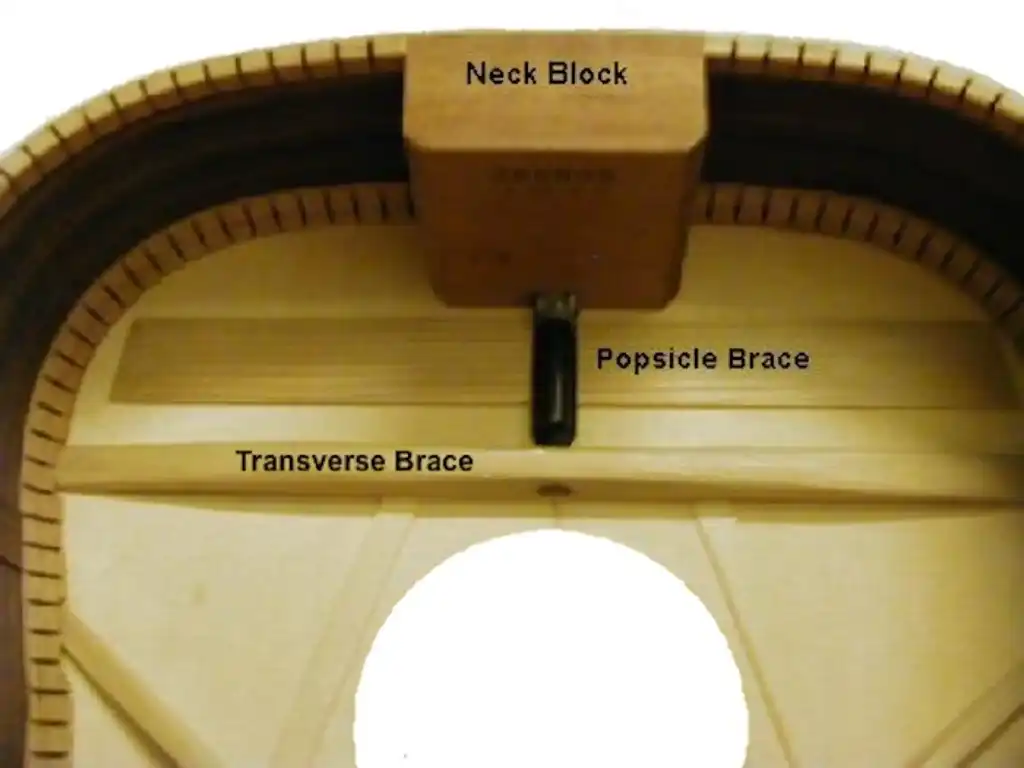
The neck of most steel string acoustic guitars, typically constructed independent of the body, is either glued to, or bolted onto, the neck block.
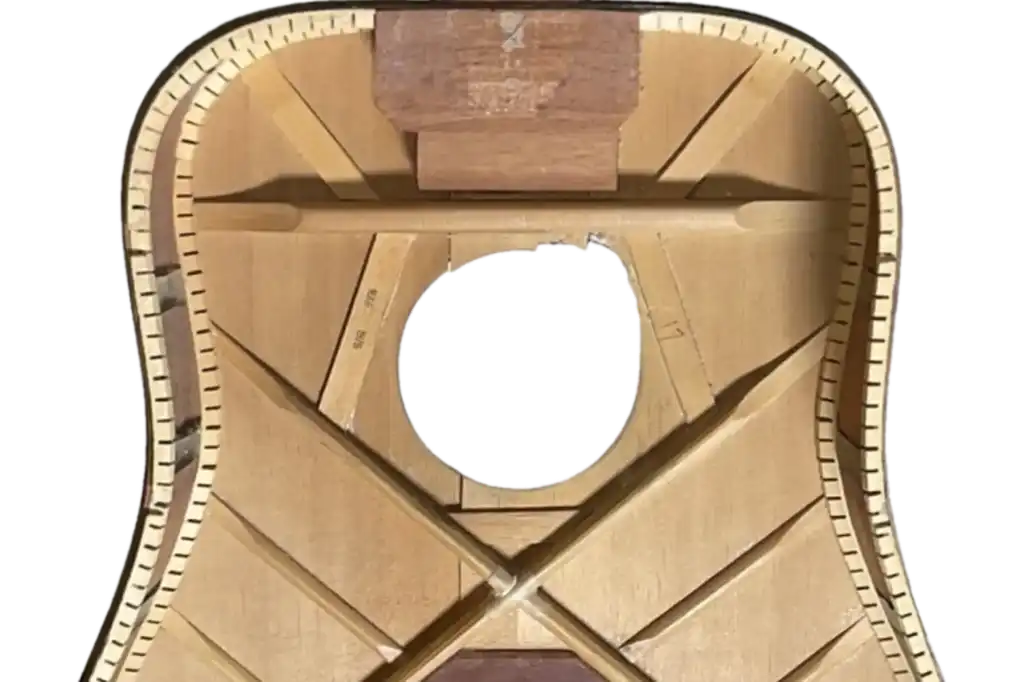
The neck block may be the single-most critical component of the acoustic guitar. It may be likened to the cornerstone of the building, or the hub of the spoked wheel. It is the structural intersection of the back, sides, soundboard and neck.
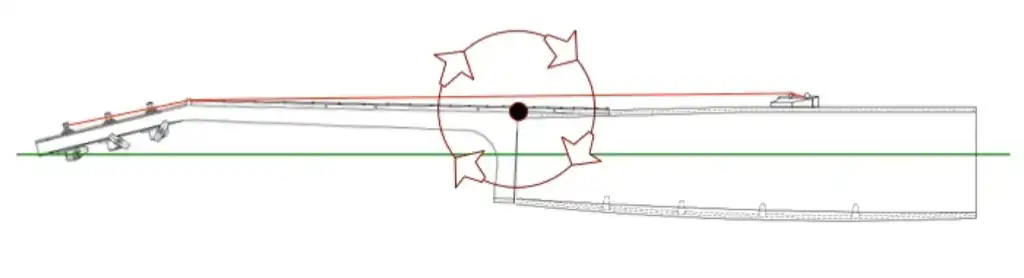
The primary force acting upon the neck block is the result of the constant pull of the strings. One end of the strings is (typically) anchored to a bridge which is glued to the soundboard. The other end of each string is secured to a tuning machine head which, in turn, is secured to the headstock at the end of the neck. At a point that is approximately halfway between the two secured ends of the string, the neck is attached to the neck block.
The traditional method of attaching a neck that has been constructed independently from the body employs a woodworking joint known as a compound dovetail. Alternatively, a straight, integral tenon may be glued, or even bolted into a mating mortise in the neck block, or a butt joint (no integral tenon) may be used in conjunction with dowels, or loose tenons.
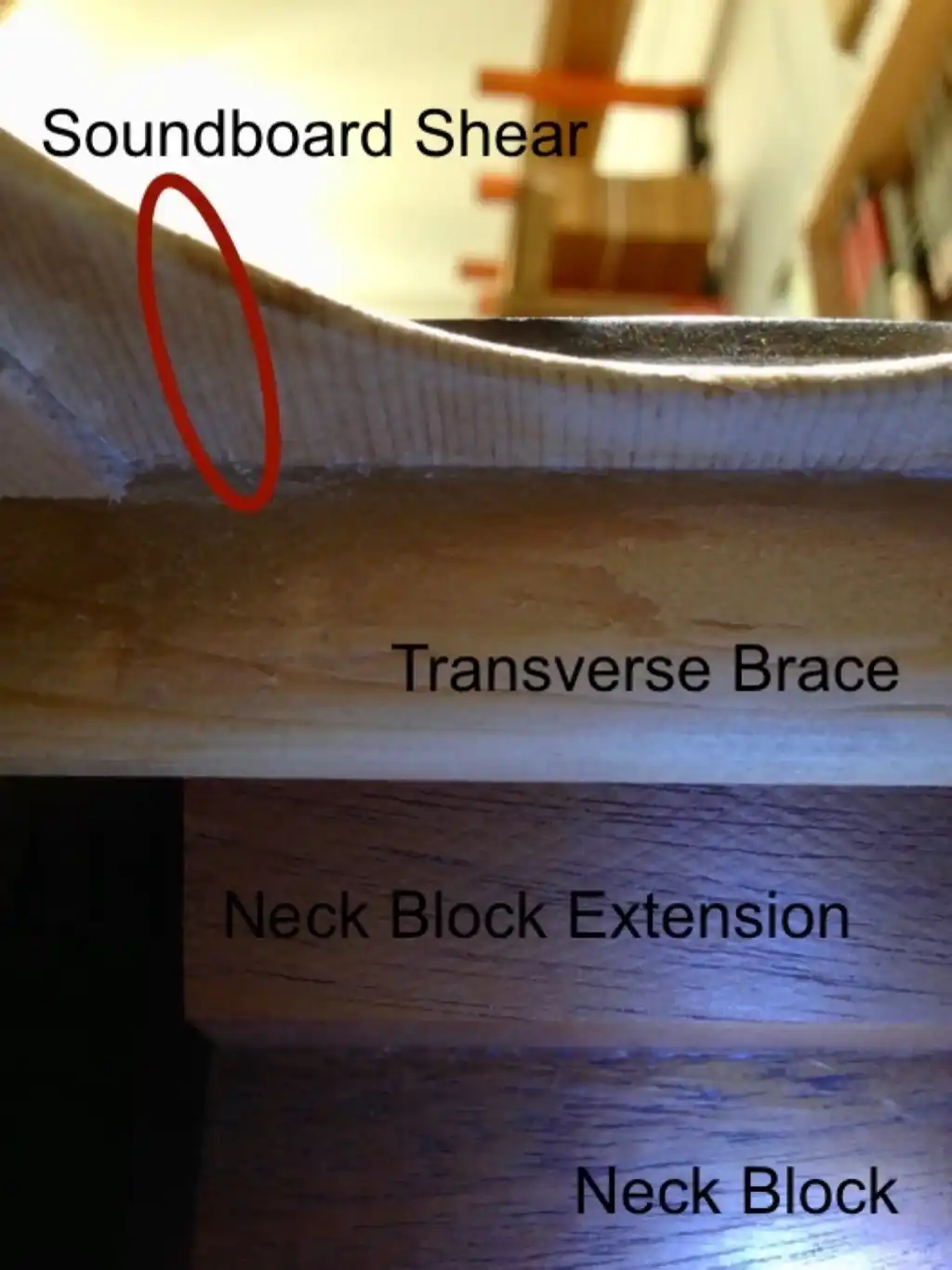
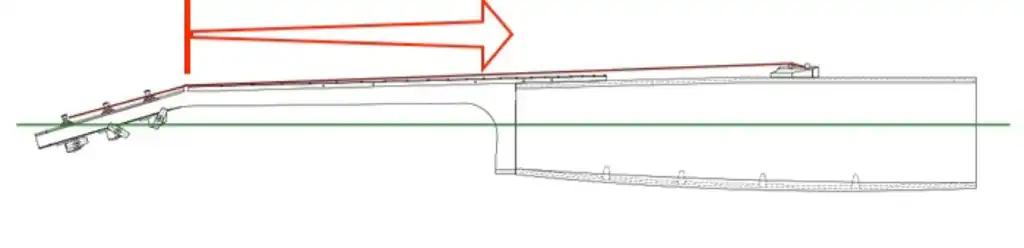
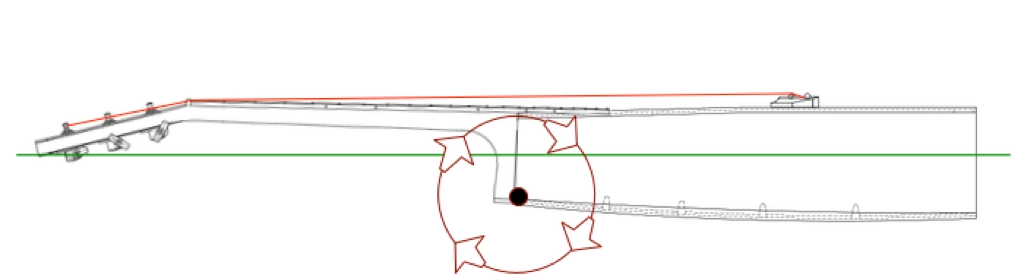
Regardless of the neck attachment method, the neck block (and everything attached to it) may suddenly rotate forward in response to a sudden change in load and/or a sudden failure in structural support. In the worst-case scenario, the soundboard will split along one or both sides of the fretboard extension, and literally shear off into the soundhole.
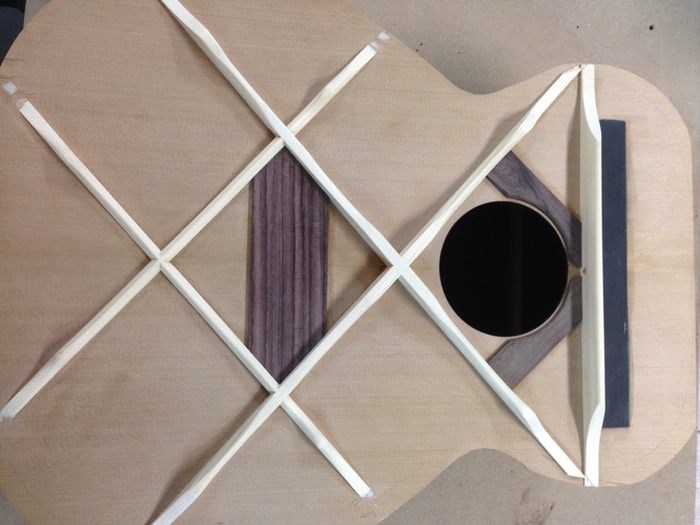
Stop to consider that, on all center soundhole, X-braced guitars, there is nothing in front of the fretboard extension except ≈ 12.5 square inches (319 sq mm) of missing soundboard! It is into the abyss of the soundhole that the neck block, the neck attached to the neck block (including the fretboard), and the section of the soundboard glued to the neck block all seemingly seek to plunge.
After a sudden shift forward of the neck block, in less dramatic cases, there may be a spring back to the original position which may, in turn, leave little visual evidence of the trauma. If such a shift has caused a split in the soundboard (or two splits, one on either side of the fretboard extension), this may or may not be immediately, visually apparent, depending on the severity of the shift.
NOTE: If you have ever wondered why you cannot keep a given guitar in tune, one that should stay in tune (as every other possible reason has been eliminated), look (diligently) for a split in the soundboard along the fretboard extension. How does soundboard shear contribute to tuning instability? As you tighten the strings, the headstock, neck, fretboard, neck block, and soundboard all shift in toward the soundhole. It is quite impressive to come to terms with how little is preventing this from occurring.
In addition to a crack in the wood, there may be a visible mis-alignment at the soundhole, as you can clearly see in the photos, below. Sometimes such splits are not readily noticeable and other times there is such significant forward movement that not only is the soundboard jutting out into the soundhole, but the neck has moved forward into the body, curling the binding in with it. Using the tuning machine heads, you can tighten and loosen the strings and watch the deformation occur in real time.
Severe damage, such as you see in the photos of the Martin D-45, Gibson Dove, and 1931 Martin OM-28 6-string guitars, below, are classic examples of sudden, catastrophic failure.

Martin D-45 Soundboard Shear
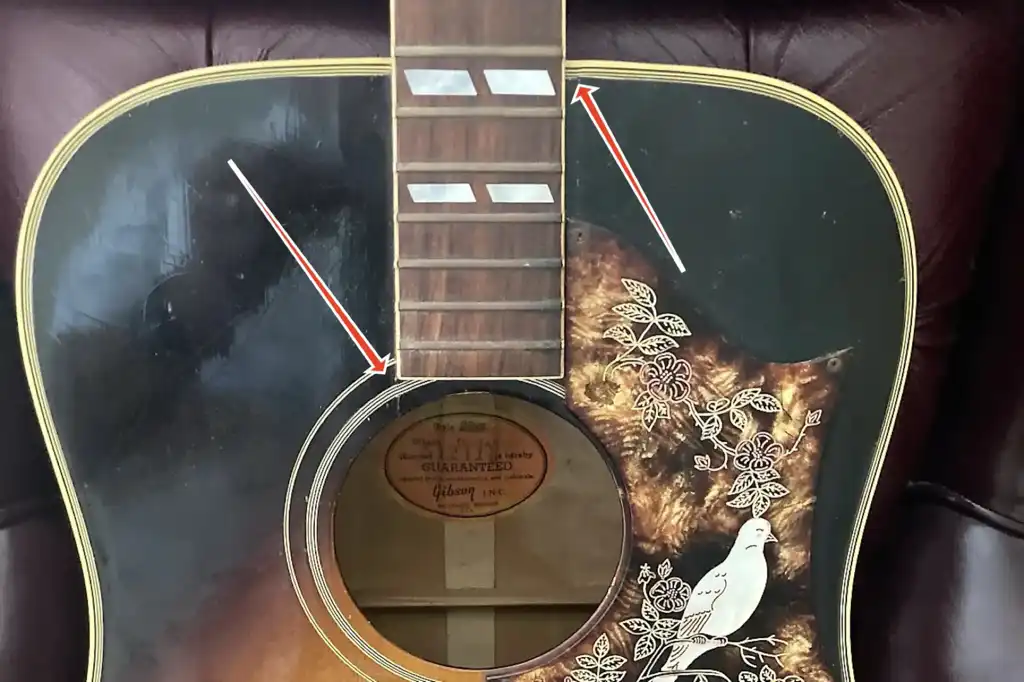
Gibson Dove Soundboard Shear
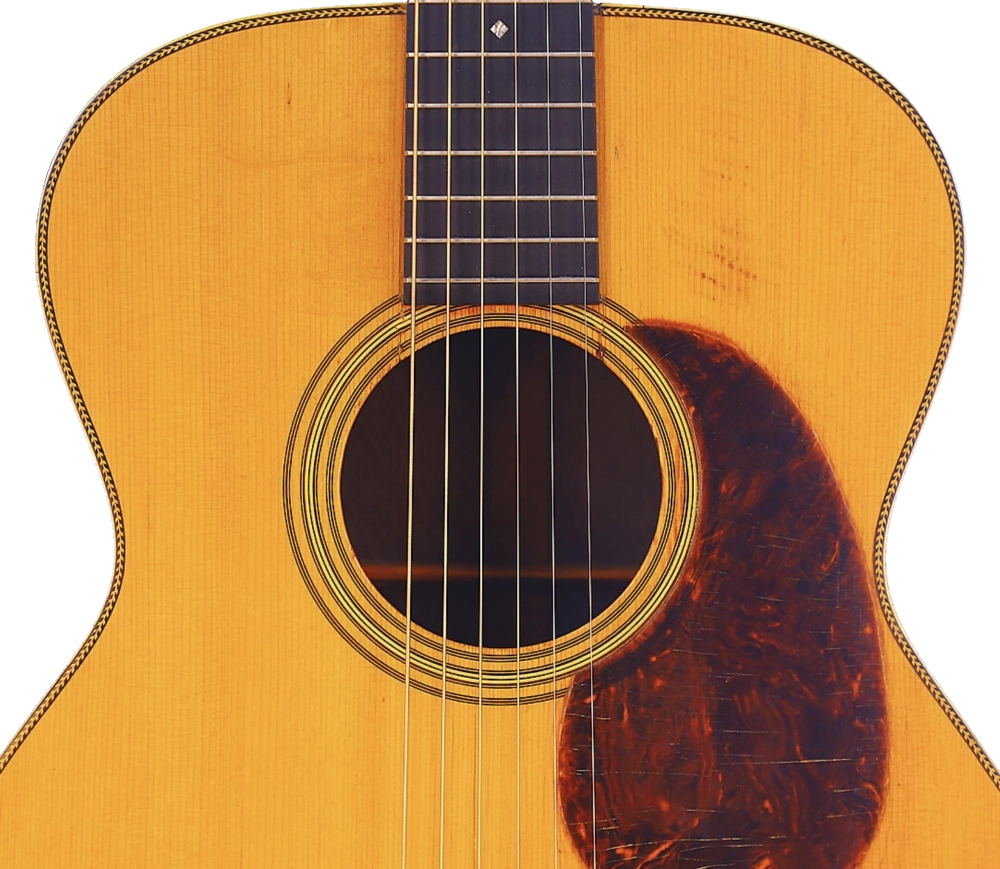
Martin OM-28 Soundboard Shear
We have seen neck block shifts and soundboard shears occurring on large as well as medium-sized guitars, on both 12 string and 6 string instruments. But what about small-bodied guitars? Surely, they are immune to this kind of damage, right?
On the parlor-esque guitar shown in the photo below, a Guild F-20 from the 1980s, everything appears intact: the fretboard is still attached to the neck and the fretboard extension is still glued down to the soundboard, the neck is still attached to the body, even the pickguard is still right where it was originally attached.
But the damage has been done on this small instrument that features a lower bout width of a mere 13-3/4 inches (That's just a fraction of an inch wider than a Martin 0-18). The soundboard has split along the grain, shearing off and plunging forward into the soundhole.
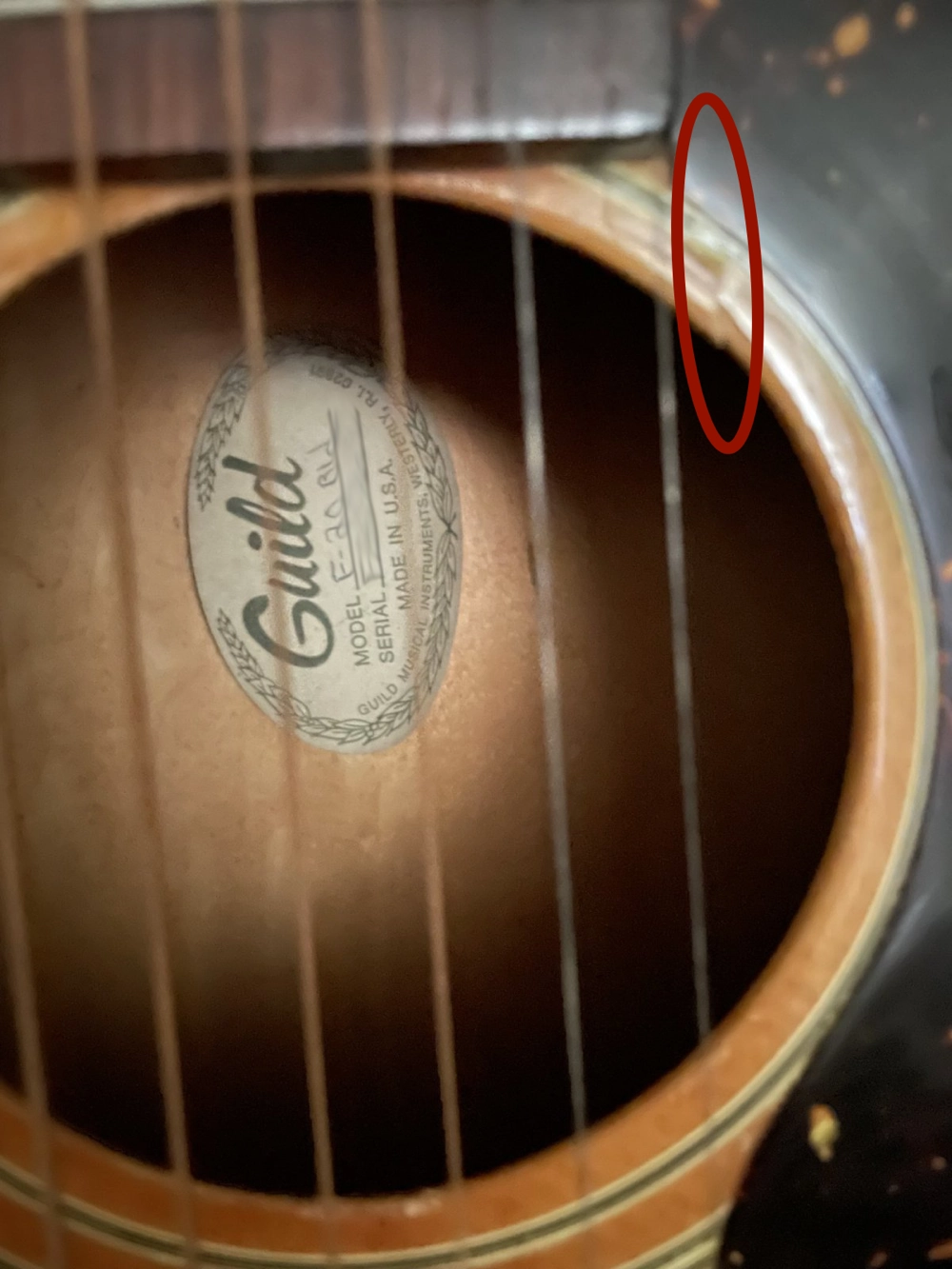
Guild F-20 Soundboard Shear
What if there is no splitting of the soundboard? Does that mean that everything is fine? Look at this next example of a 12-string guitar which does not have any visible splits or cracks along the fretboard extension, at least, not yet. In the photo, below, look at the stress fractures in the finish emanating from the neck heel/body joint out across the soundboard on each side of the upper bout. It is just a matter of time ...

Guild G-312 Stress Fractures
Below is a second photo of that same guitar, taken some time, later. Note the buckling/collapsing of the soundboard (beneath the fretboard extension) into the soundhole as a direct result of the forward shifting of the neck. Most importantly, do you see the split at the edge of the soundhole, directly in front of the fretboard extension (it is located slightly to the left of the center of the photo)? I hate to say it, but, "I told ya so!"
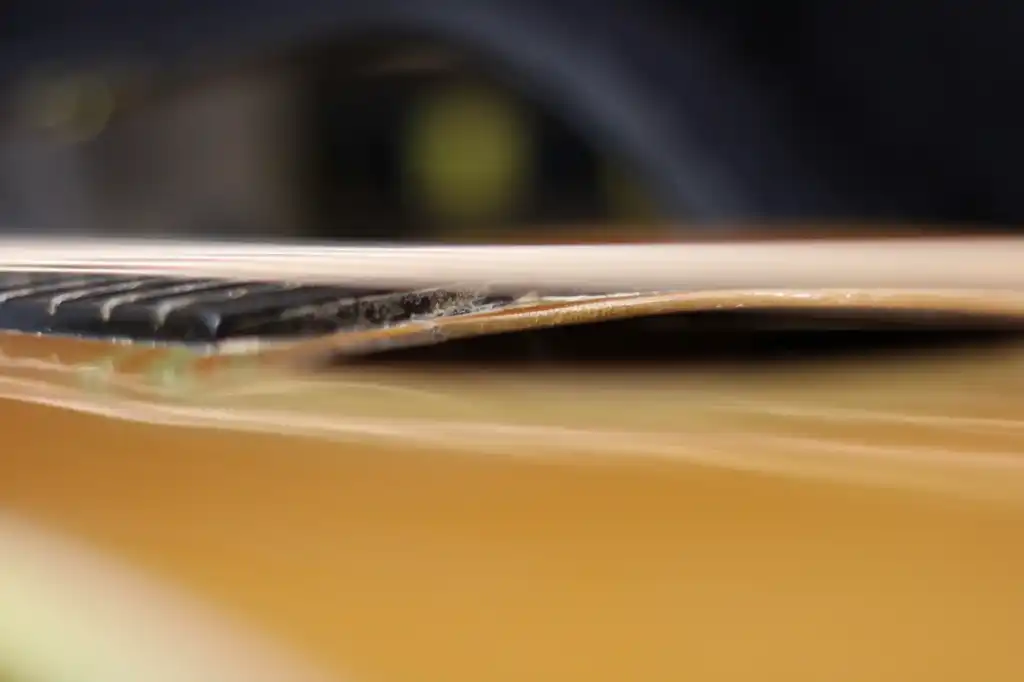
Guild G-312 Soundhole Collapse
Guitars built using the "Spanish Heel" construction method can still suffer from a forward shifting neck, even though there may be no formal (separate) neck block. To illustrate this, here are photos of a 2021 Turkowiak guitar built this way, having no center soundhole.
Look at the "crease" across the upper bout, at the end of the fretboard, running perpendicular to the string path.

Turkowiak Crease in Soundboard
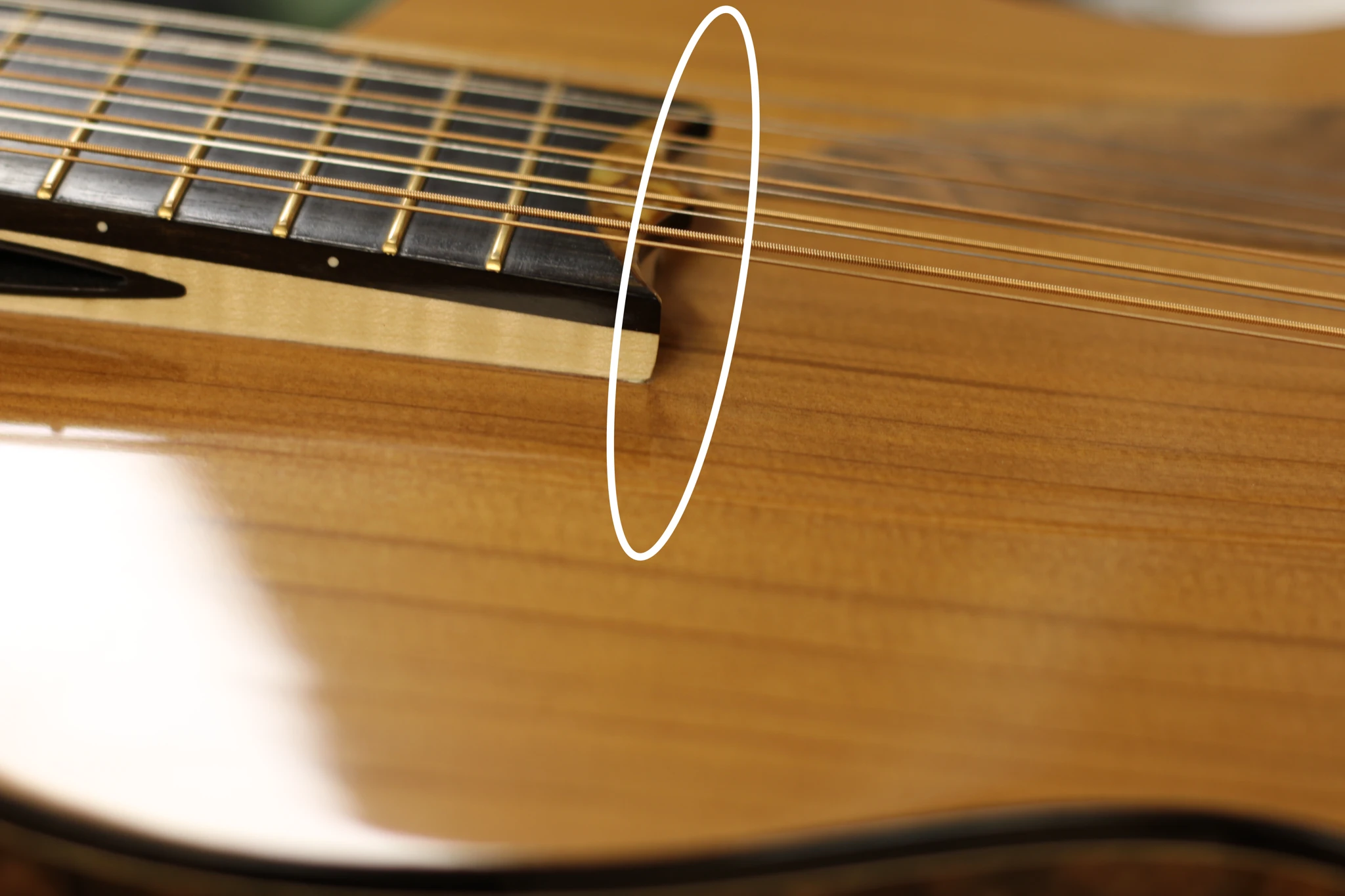
Turkowiak Crease (top view)
There is tremendous tension applied to the structure of the steel string guitar. We know that a chain is only as strong as its weakest link. A similar understanding must be held for the structure of the acoustic guitar. If there is a weakness, longitudinally, between the headstock and the tail block, given the opportunity, it will be exploited under string tension.
On this particular 12-string (shown above), the weakest point was to be found in a section of the soundboard directly in front of the fretboard extension (the same place a soundhole would begin on an X-braced guitar). You can clearly see the crease where the soundboard has compressed and buckled under the tension, permitting the neck to shift forward.
Consequently, with the saddle being as low as it can go (already buried in the slot), the action is very high. Since the guitar has been built using Spanish Heel construction, and the components are assembled with epoxy, a neck reset is not viable, as confirmed by the builder.
At the time of this writing, this otherwise very lovely guitar is barely 2 years old. Short of planing (and/or replacing) the fretboard in an attempt to compensate for the deformation, this guitar is already, sadly, at "end-of-life."