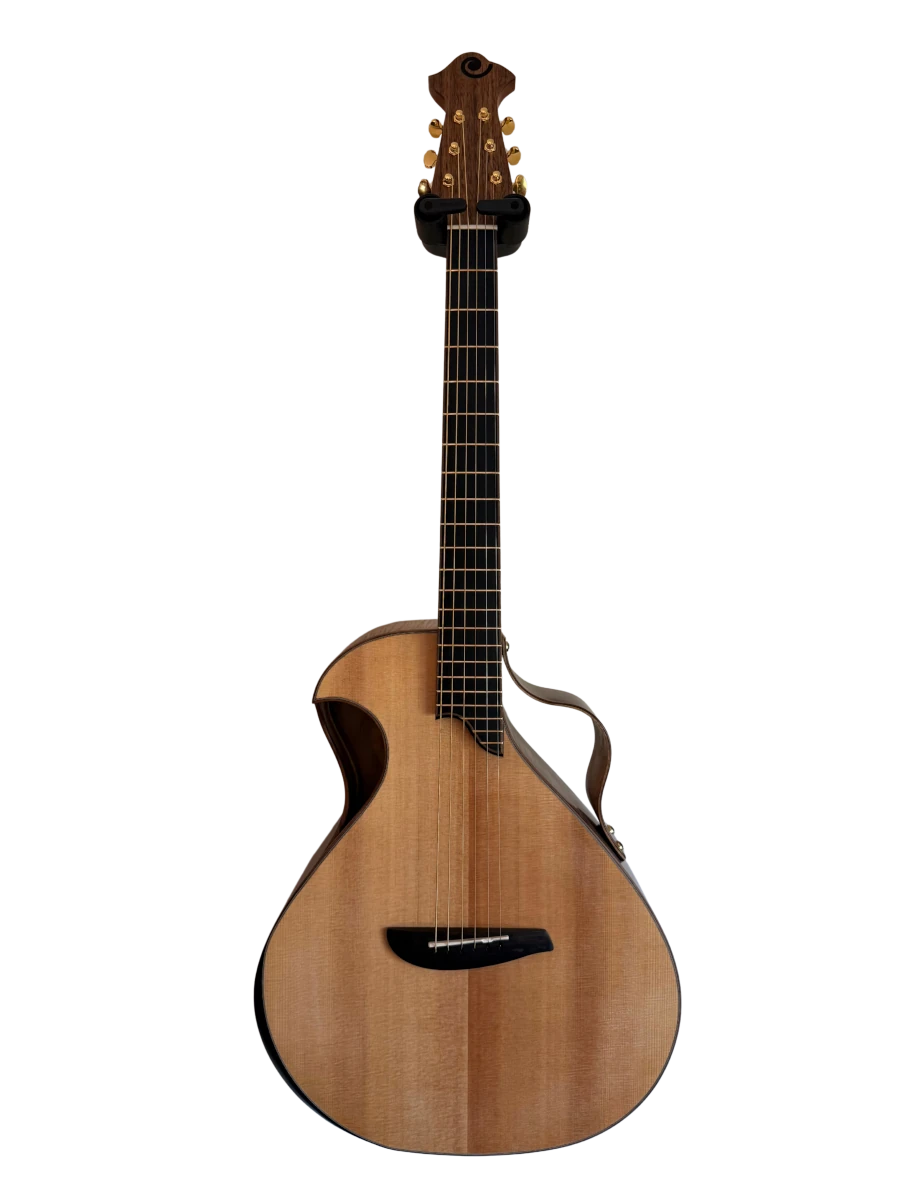
SORDID Tale - Not for the Squeamish: In the Fall of 1980, I was attempting to modify a full-shouldered acoustic, one of my own, into a cutaway. I know, "How dare I!" This particular surgery did not go well ("See! Told ya' so!"), and I ended up amputating the "treble side" shoulder completely {gasp!}. I patched the gaping hole into the body.
Moving beyond the obvious reaction, "You ruined the guitar!", and much to my surprise, the guitar did not sound all that different than it did before. Seriously, the things we kids get told!
Though it still sounded like a guitar, the instrument was now undeniably miserable to attempt to play while seated, unless I used a guitar strap. And, did I mention: it just looked terrible. The handful of people who saw it recoiled in disgust. Parents hid their children's eyes to avoid permanent scarring. I was refused entrance to public spaces with it, and ... okay, not really. But I imagine you get the point.
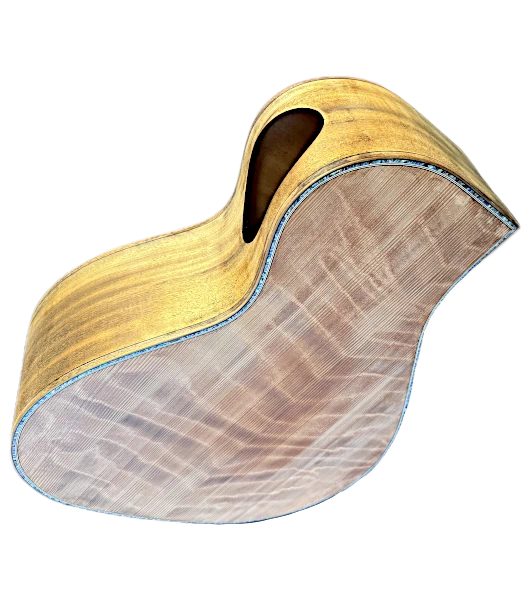
It was nearly three decades later when, instead of amputating a shoulder off an existing guitar, I intentionally designed a guitar without an upper bout on the treble side.
Lest I have pushed anyone too near the proverbial edge with such radical dismemberment of the acoustic guitar body, if I was to build a stringed instrument and deliberately leave out BOTH shoulders of the upper bout, you would likely call my instrument a renaissance guitar, or a bouzouki, or a teardrop mandolin. Below is a photo of a cittern from luthier Stefan Sobell.
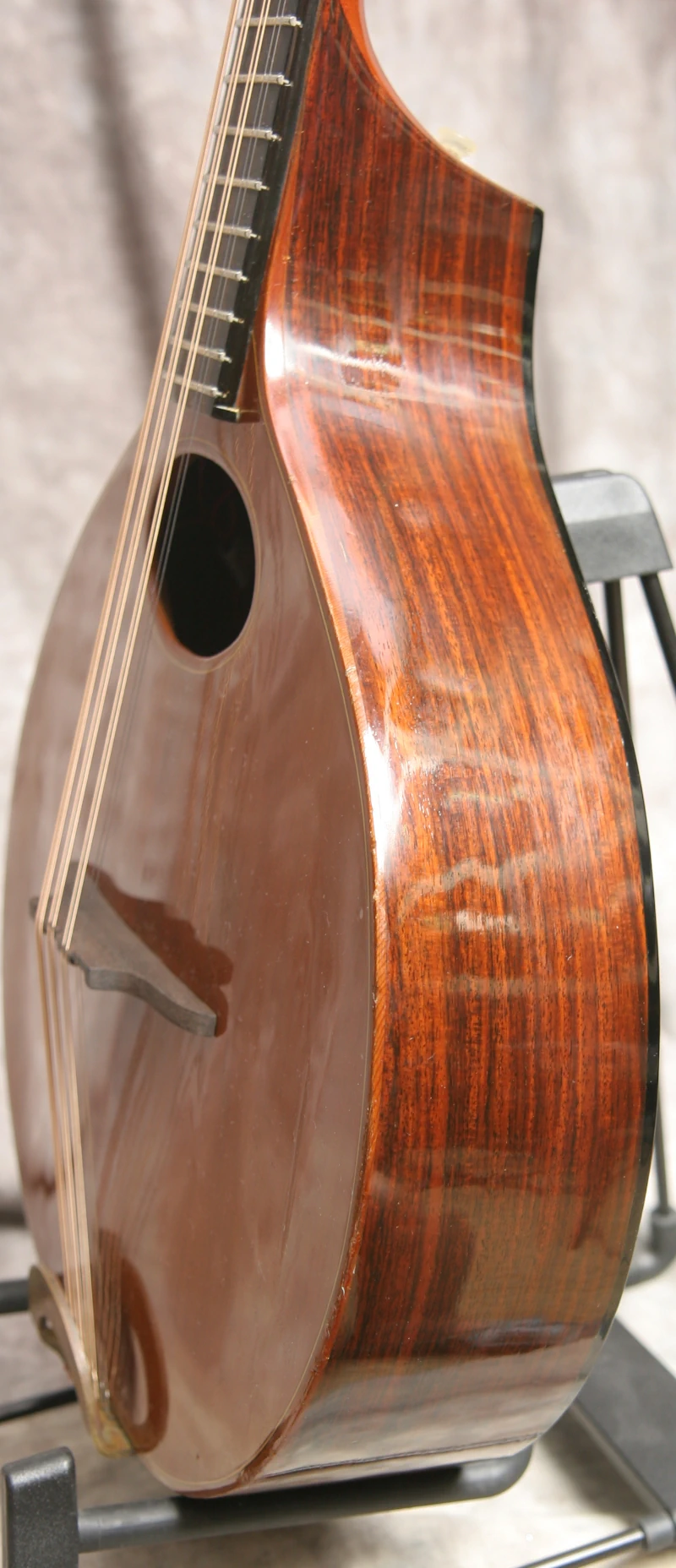
A partially shoulder-less guitar is not all that crazy of an idea, after all.
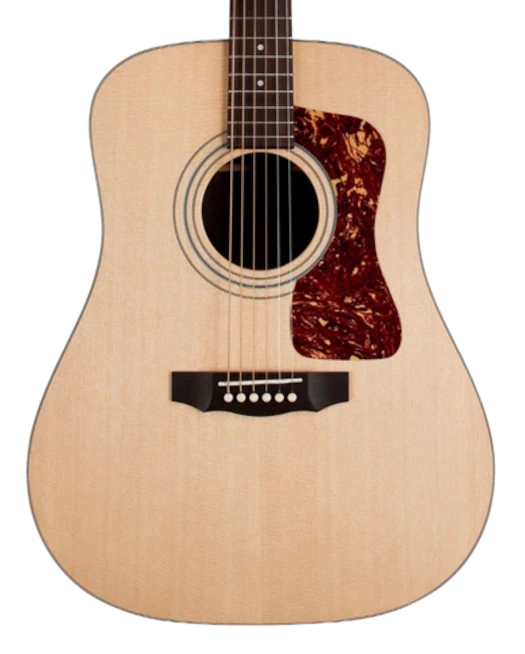
If a cut-away describes a small cut, or "bite" out of the shoulder, what might I refer to a non-existent shoulder design as? The body definitely slopes away from the neck, and "sloped shoulder" might have worked, but the term is historically associated with a rounded, or drooped shoulder design, such as you would see on a Gibson J-50, for example (see below). The slope appearance may be easier to visualize if you contrast the Gibson with a guitar known for a more square shoulder design, such as a Guild D-50 (below the Gibson).
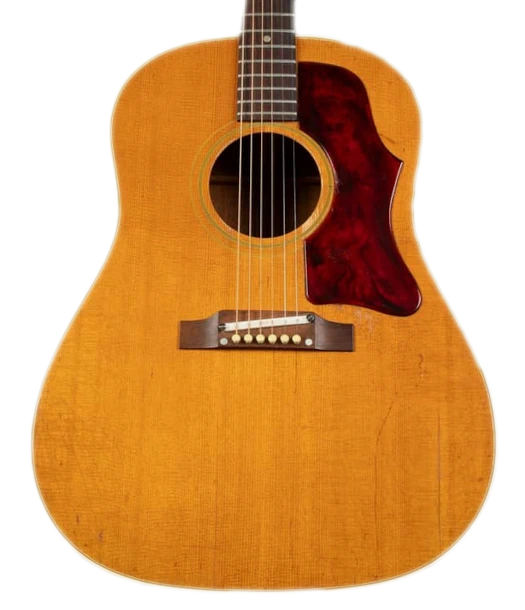
Playing off the word cut-away, fall-away might aptly describe the appearance of the treble side upper bout. When you hold the instrument, and you let your eyes follow the uninterrupted contour from the headstock, down the neck, and on down to the lower bout, the side seemingly "falls away" from the neck. Sort of. However, the term fall-away (fall away, falloff, etc) is also already taken, and references a deliberate drop in the fret plane, away from the string path, along the section of the fretboard that resides over the soundboard.
A closer look at the lines, from all angles, revealed the name of the feature: the body gently curves away from the neck. It is a curve-away. That is my story, and I am sticking to it!
My first "curve-away" experiments were with designs where I had moved the soundholes completely onto the sides. My thinking was that I wanted to maximize the soundboard area, as I was intentionally removing a large section of the body.
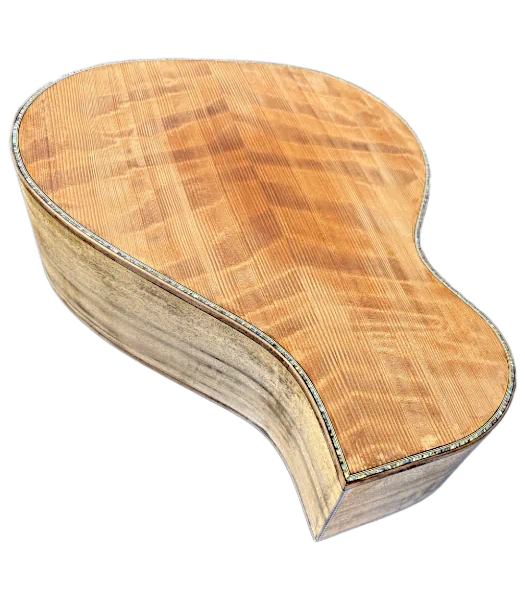
These guitars worked perfectly fine. Never one to leave "well enough" alone, and with my Dauphin model being such a comfortable, enjoyable guitar, I decided to use it as a base, and incorporate my curve-away design. The result was ... well, you'll see ...
The sides are either laminated in place or, if I am using solid wood, bent to shape. Either way, the sides are fitted with laminated linings. I add carbon fiber ribs (side braces) to the sides, tying them into the linings.
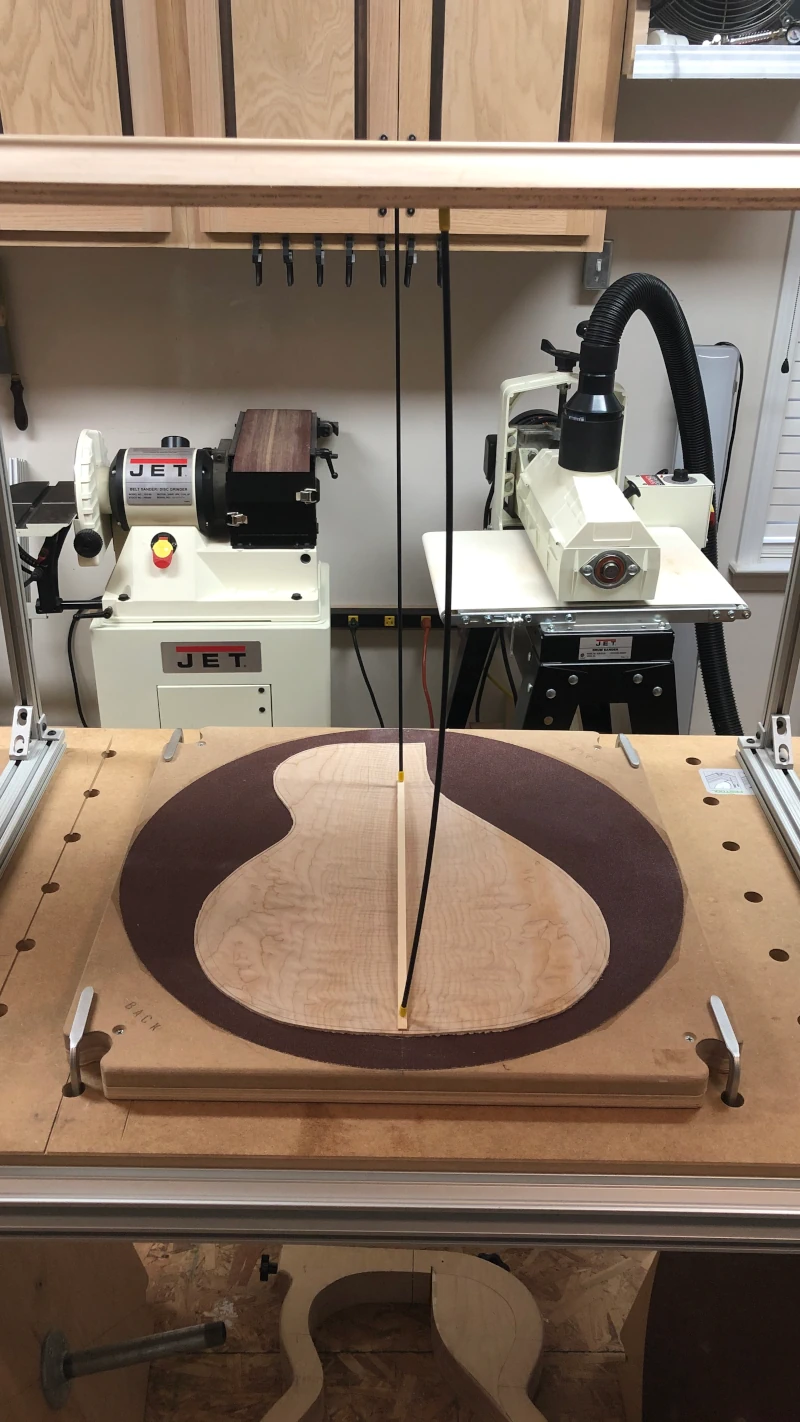
In the photo, below, I have pre-shaped a back plate. Note the "curve-away" insert added to one of my custom body molds, on the floor, beneath the table.
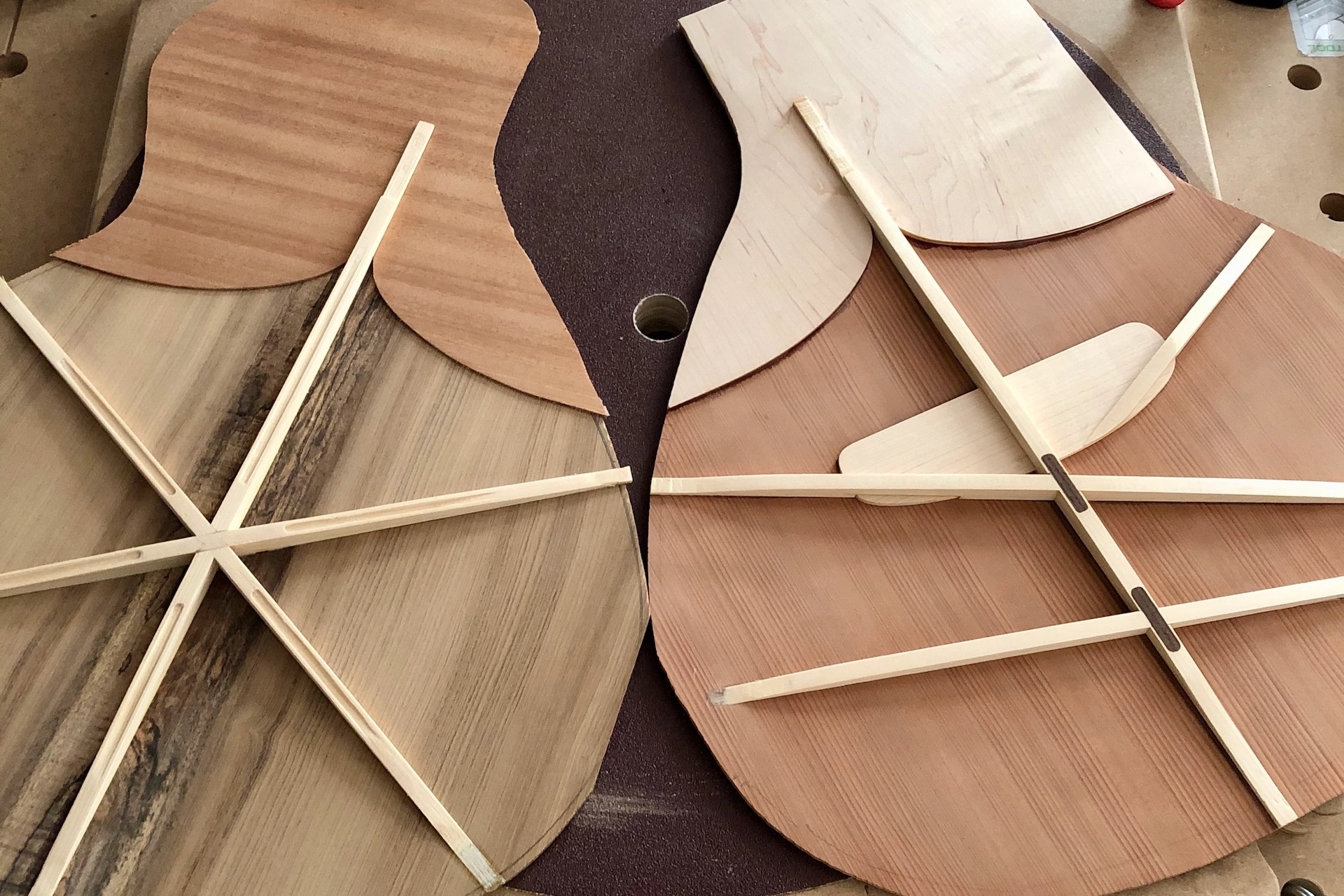
This is a fun bracing combination. The back (on the left, in the photo, below) receives an interlocking "star" pattern. All six points are fitted into notches in the laminated linings, forming a very rigid frame. The back plate, itself, is kept very thin. The soundboard is braced with (what I call) a "mitre" pattern. Not all of the soundboard braces rest on the linings.
The longitudinal braces that run down the center seams of both plates are let into the neck and tail blocks, tying the blocks together, and stabilizing ("rigidifying") the shell.
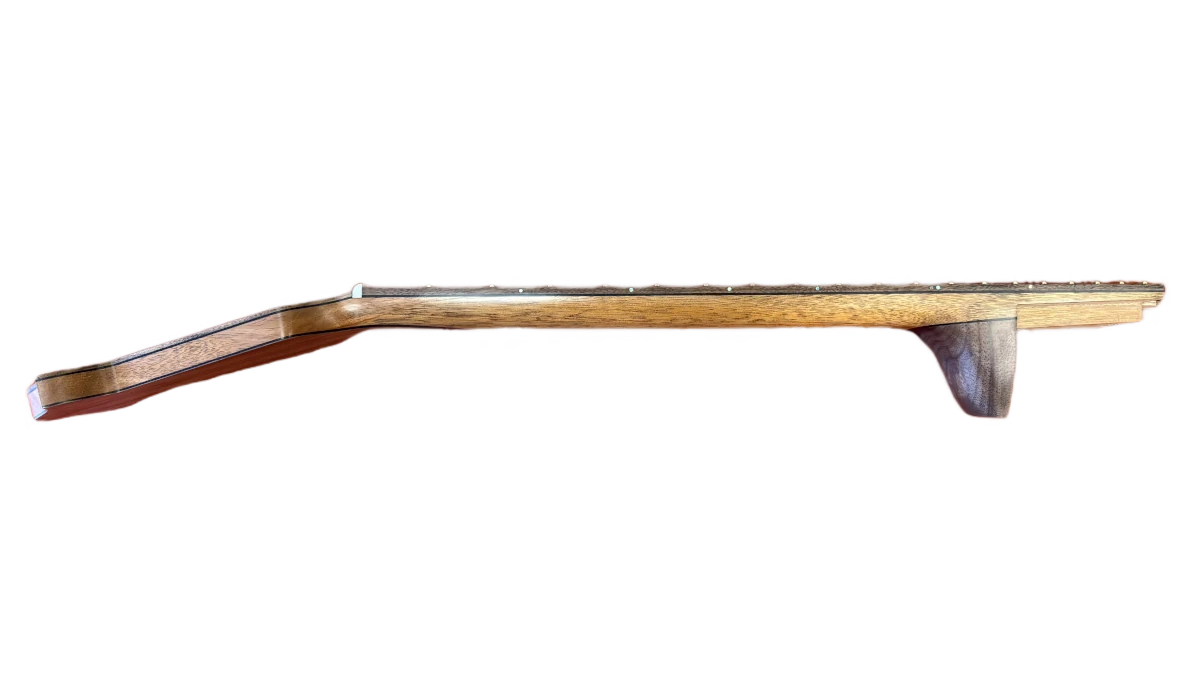
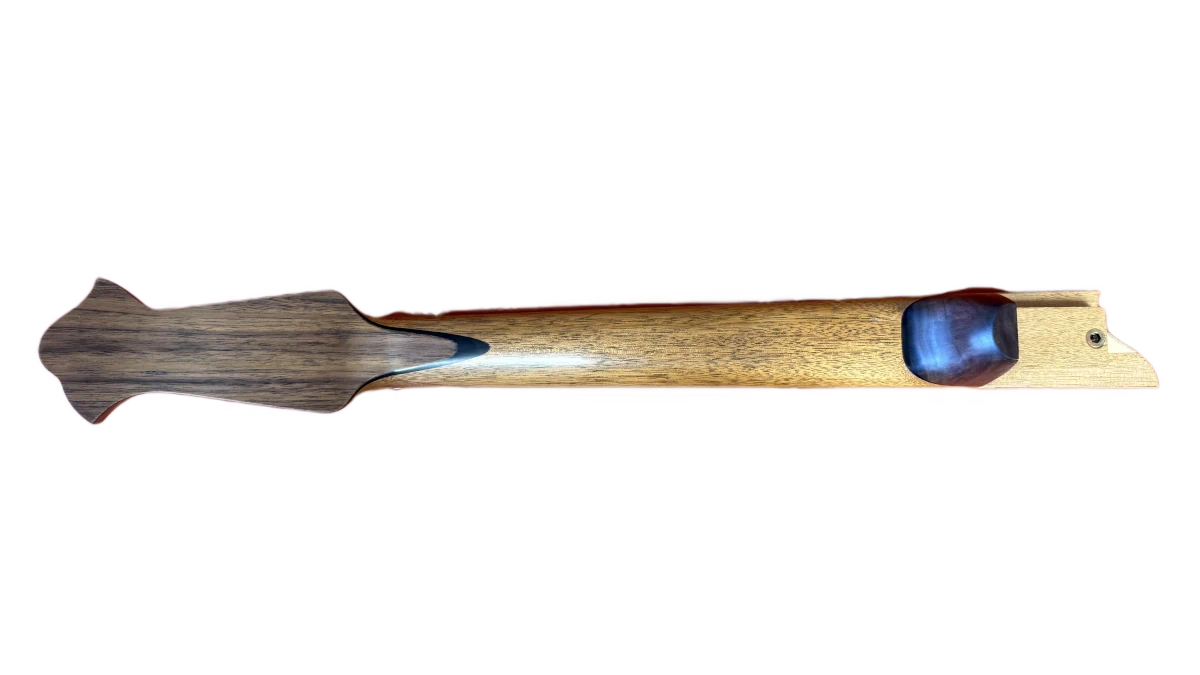
This build's neck is made of a single billet of 4/4 Spanish Cedar. It features a scarf joint headstock, laminated on front and back with Walnut, a carbon fiber D-Tube, and a contrasting "stacked" heel from Walnut.
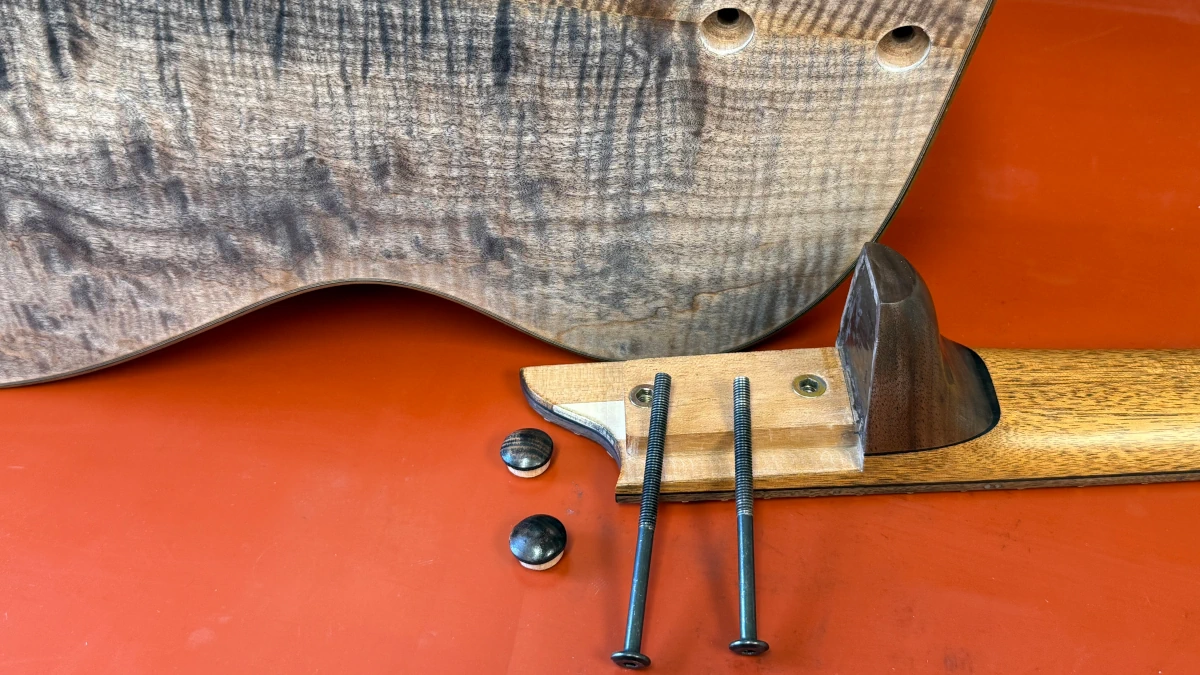
The neck bolts onto the neck block from the back. The "pocket" into which it rests on the front can easily be shimmed if any adjustments are necessary. The hole cover "buttons" are held in place via magnets.
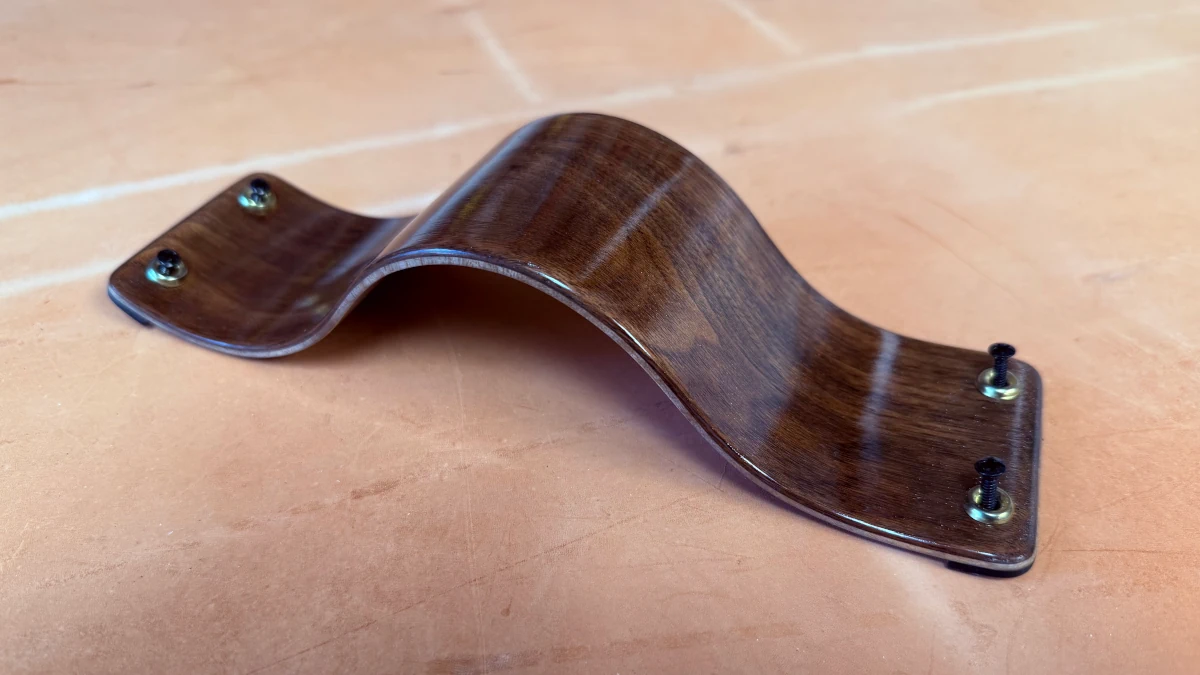
I fashion a leg rest for the upper bout, a removable accessory that both lets the player hold the guitar on the lap, as well as add a familiar curve to the outline of the instrument. If desired, it can be completely removed.