The Soundboard
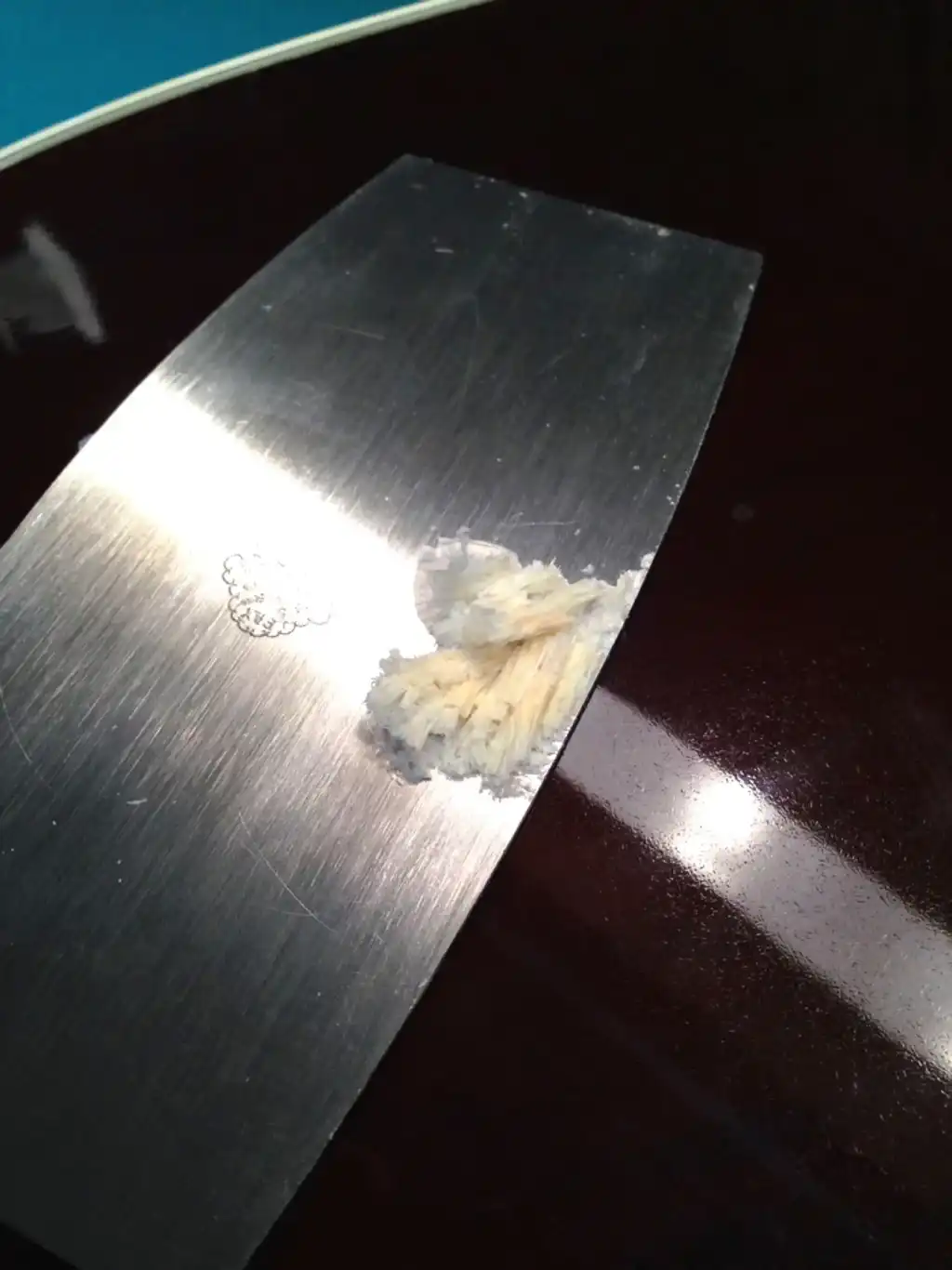
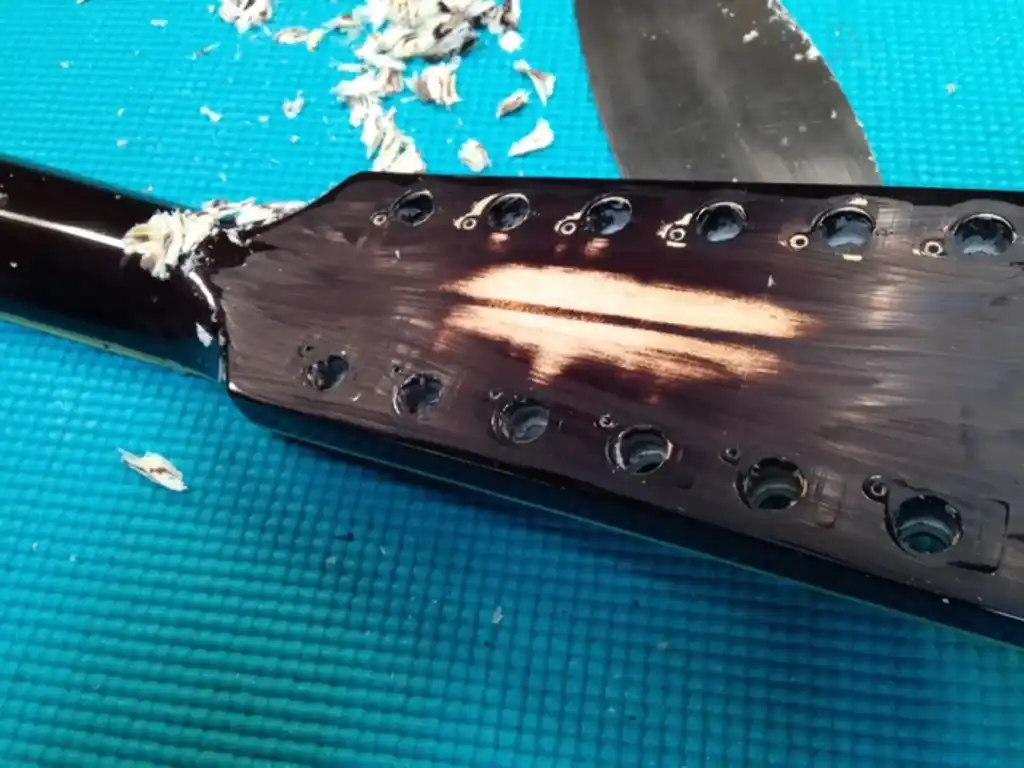
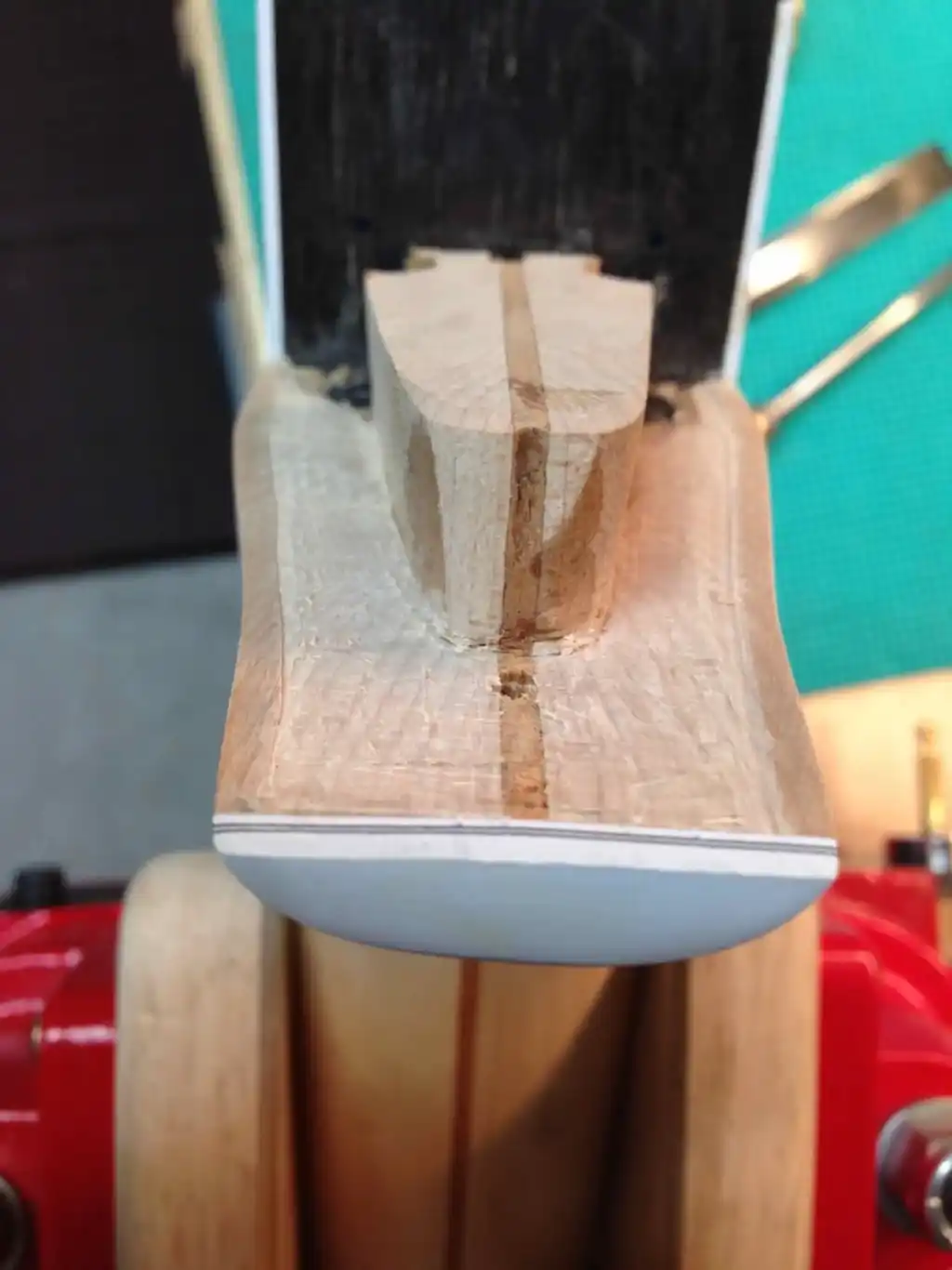
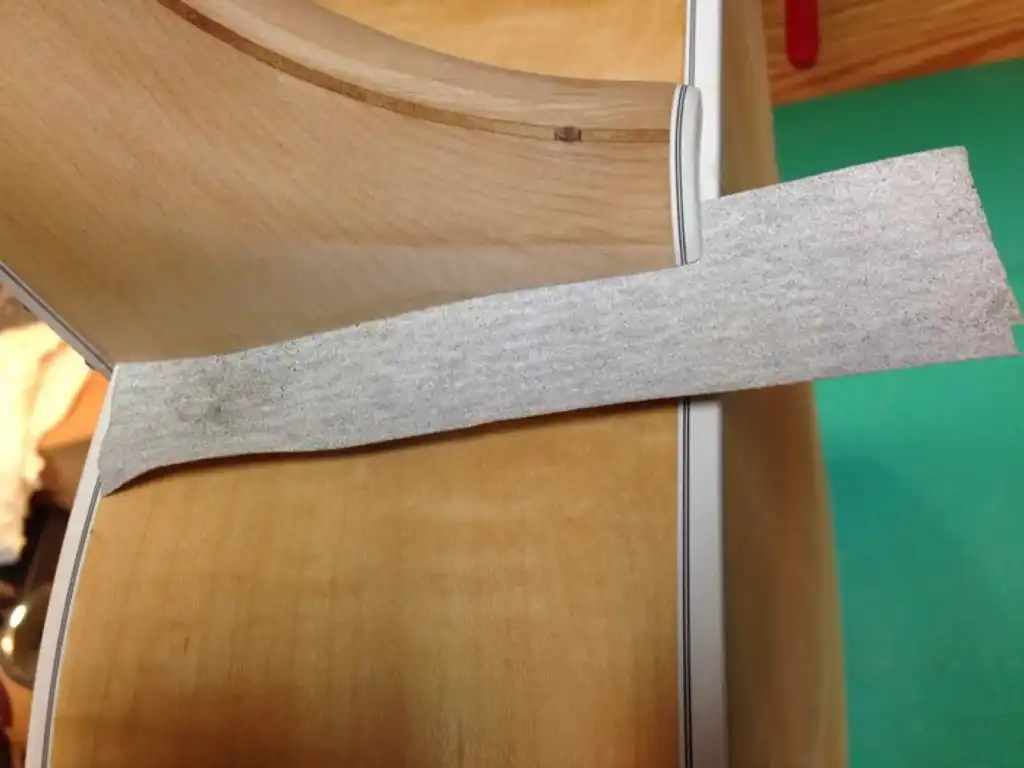
I spent another hour carefully scraping and sanding to remove any remnants of lacquer from the neck and body, and then moved on to the soundboard. I had left the finish in place during the application of steam, as it would offer a degree of protection should any water hit the top.
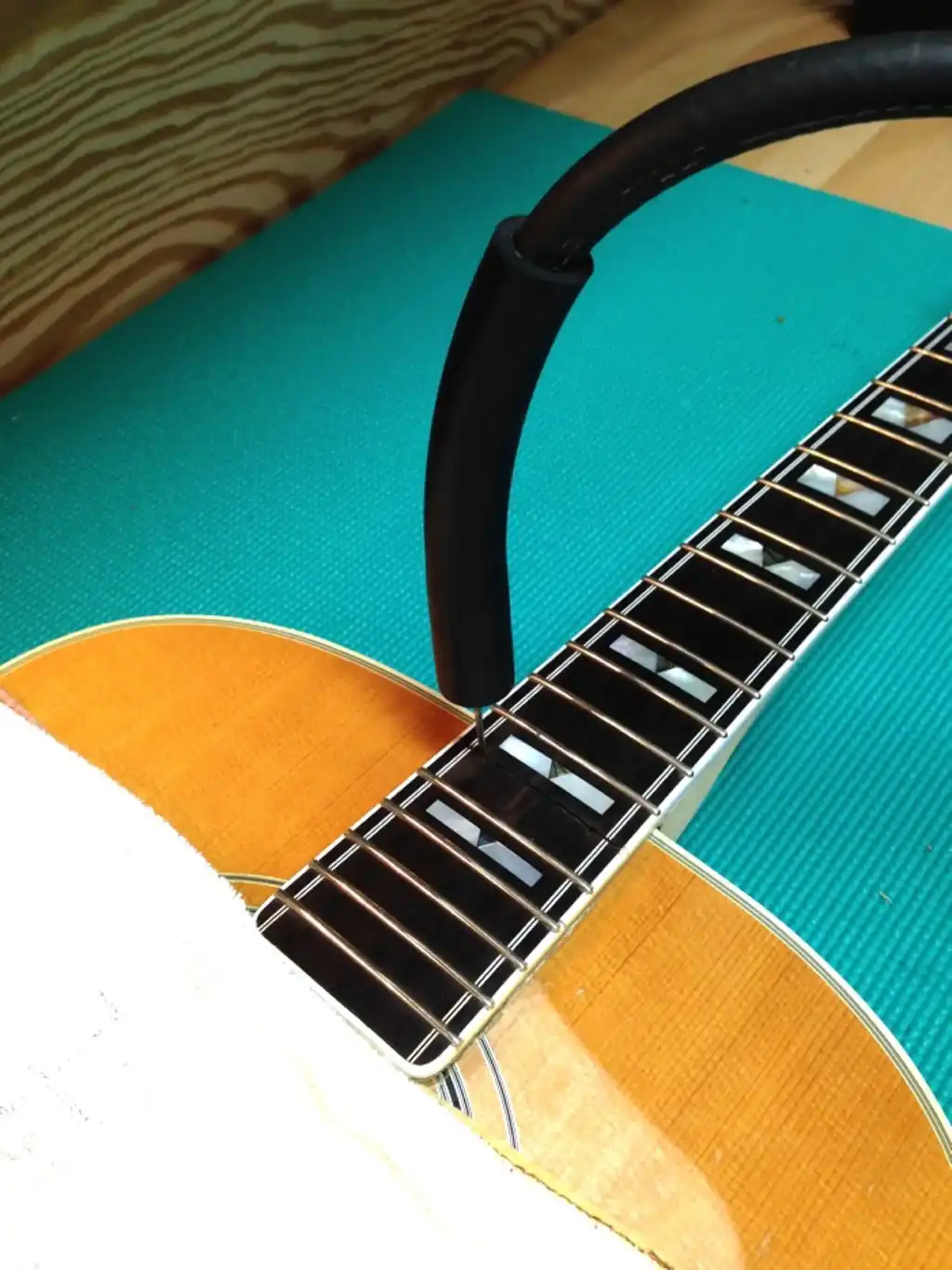
I heated the ebony bridge (a heat gun, heat lamp, hot iron or even a hair dryer will work) to soften the glue. Care must be taken to not overheat the surrounding areas, as other glue joints (bridgeplate, braces, top to sides, binding, etc.) need to stay intact. Some very thin tools (palette knives) were used to release the bridge from the underlying Spruce.
Hardwood bridges are glued directly to unfinished, softwood tops (at least, they *should* be). When removing a bridge it is important to work slowly and deliberately to minimize any tear out of the soundboard.
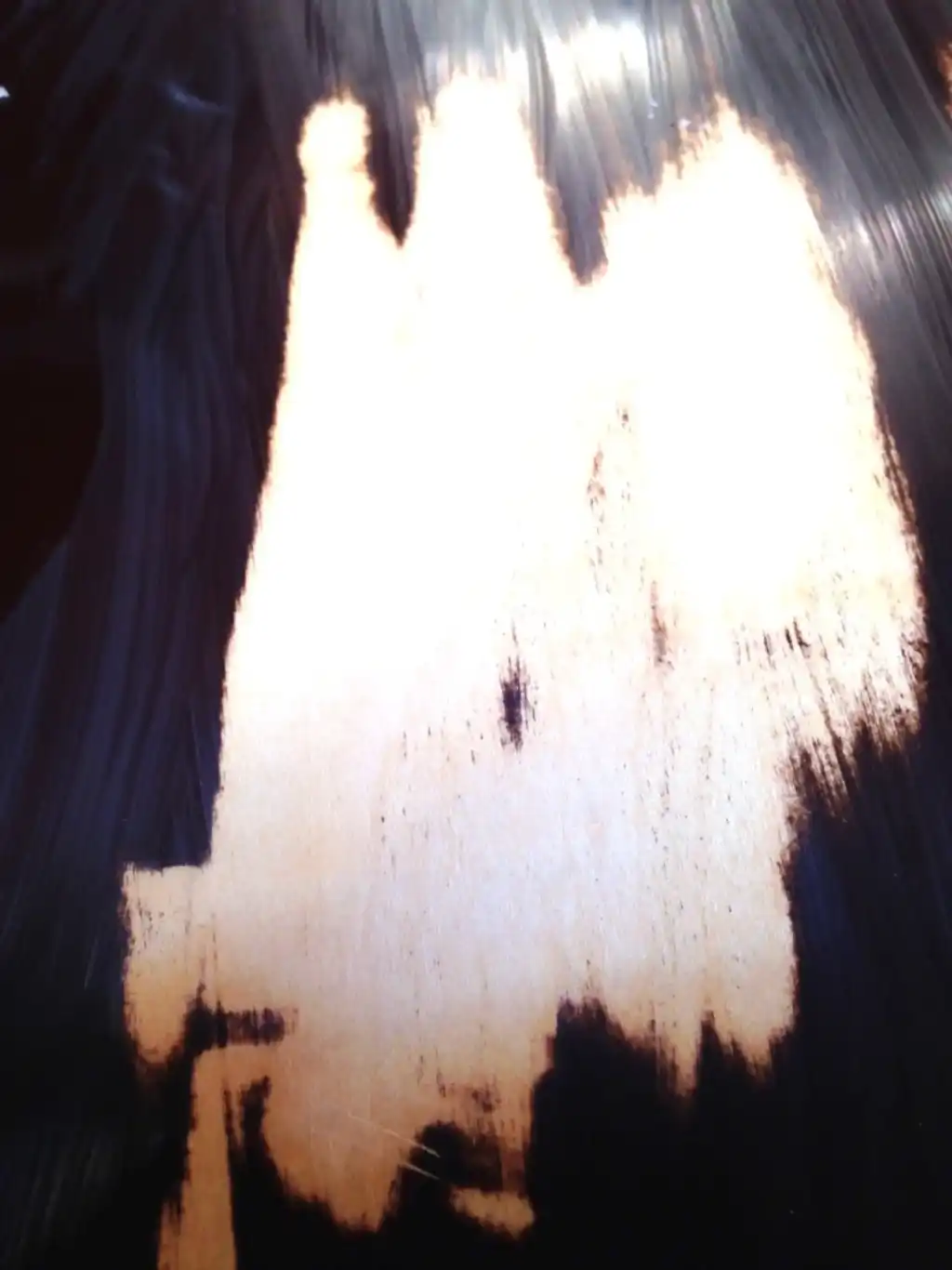
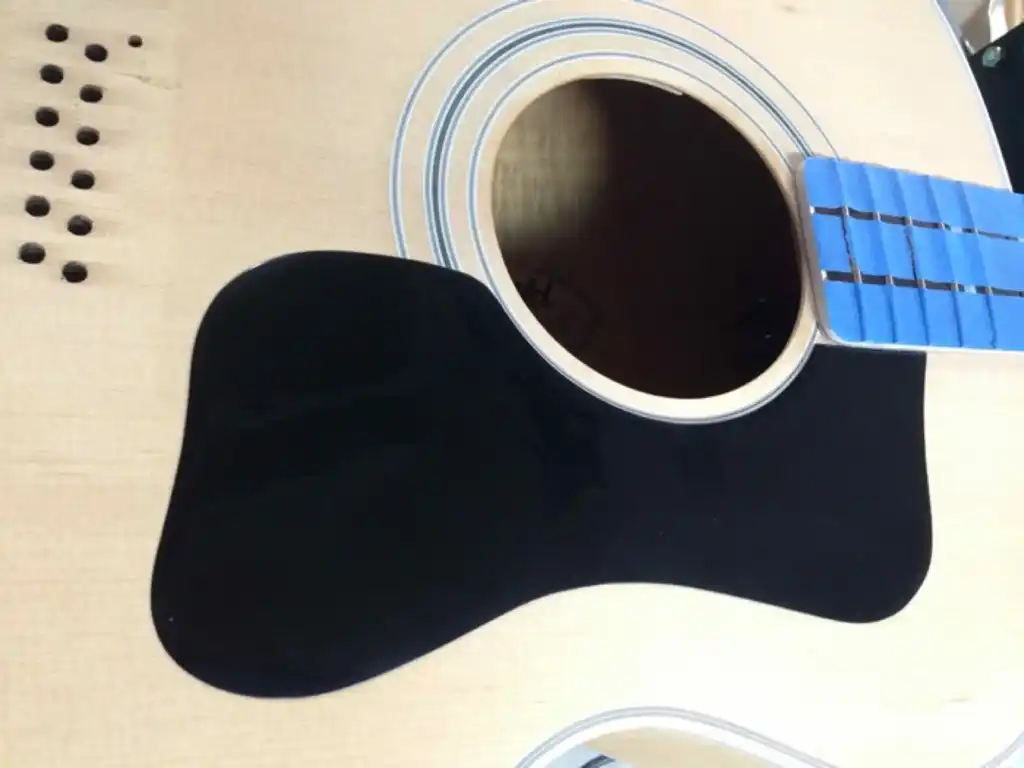
The same process removed the pickguard, which did result in some tear out. Unlike the bridge, which must be glued to the raw wood surface of the soundboard for longevity, a pickguard *should* be attached to the surface of the finish, not the surface of the raw, unfinished wood. In the era of the construction of these guitars, celluloid pickguards were fused directly onto the soundboards using lacquer thinner.
As a result, they can be extremely difficult to remove, and are often sanded off. In my case, lifting the pickguard away from the top also revealed some serious grain runout in the Spruce. I will be replacing the pickguard, which will cover any blemishes.
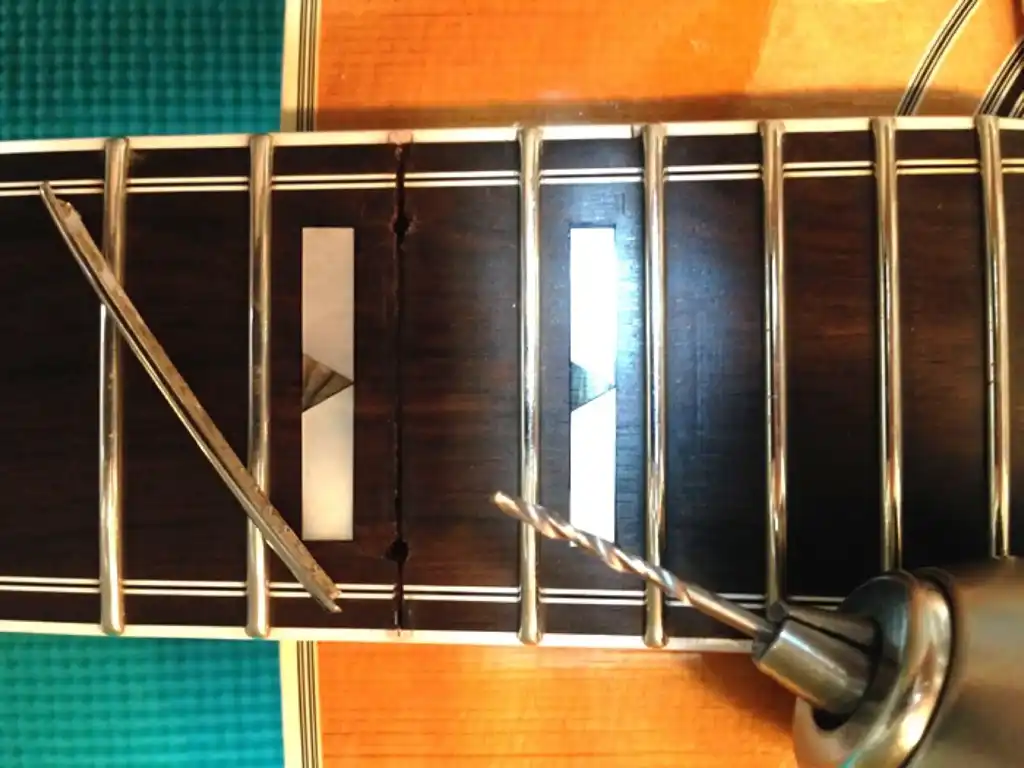
I spent a bit more time improving the condition of the white plastic binding which was (evidently) a bit irregular to begin with. There were a couple of cracks in the binding around the fingerboard but, as they were stable, I chose to leave them alone. Solvent-based plastics will shrink over time and, when they do, they can leave some nasty scars.
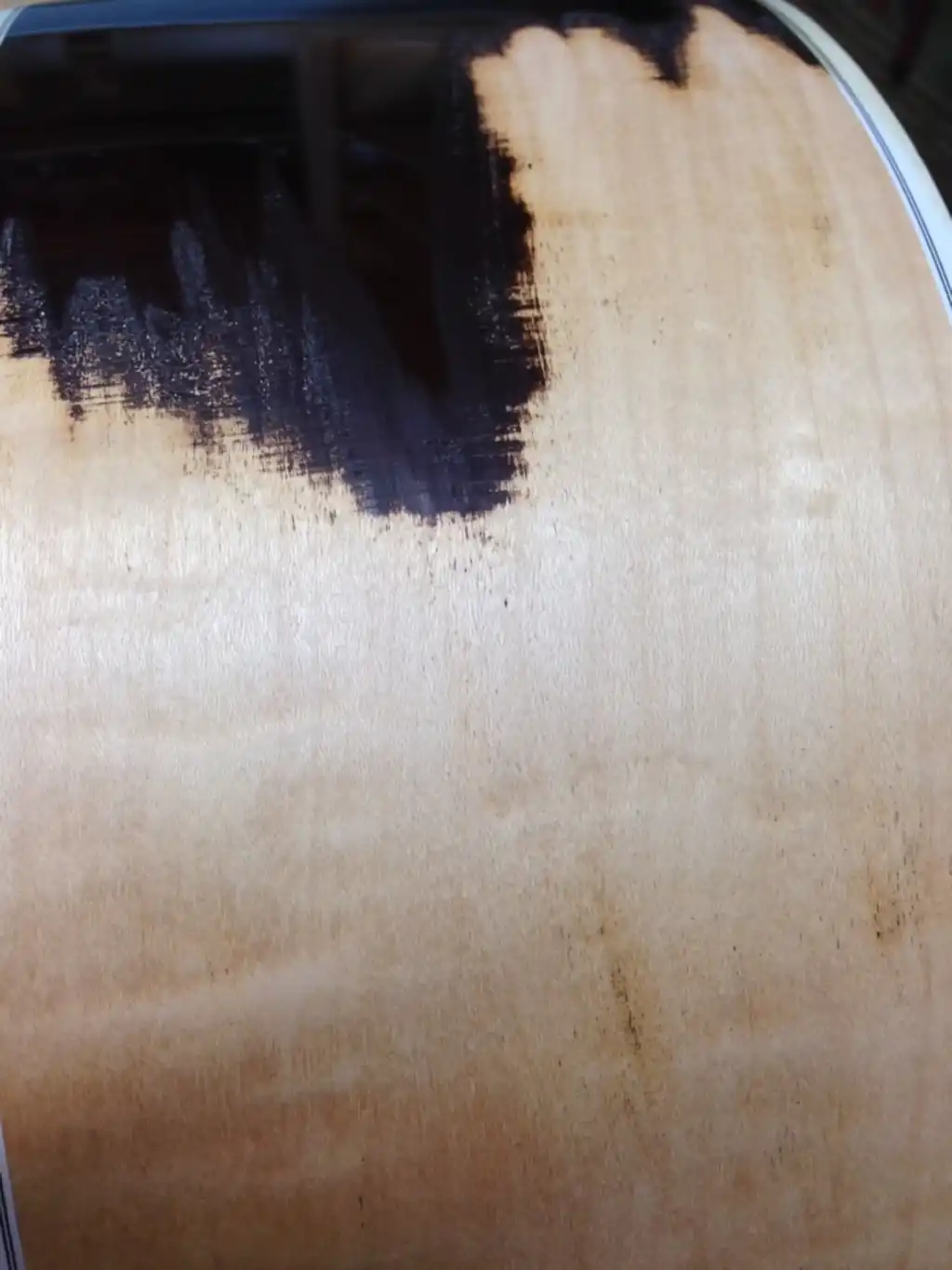
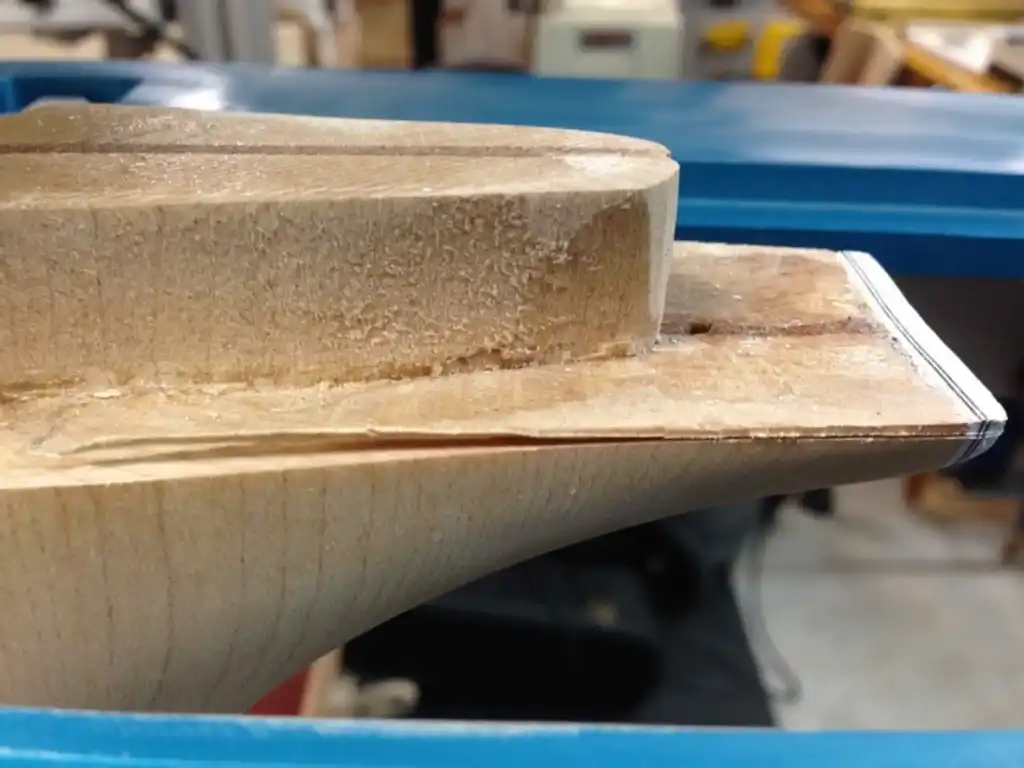
With the fingerboard, bridge and pickguard removed from the body it was a simple task to carefully remove the finish from the Spruce top. It was important to just take off the finish, not the underlying wood, since a top’s thickness plays a major role in determining its stiffness and, subsequently, both its sound and its strength. With that task accomplished, I wiped a coat of Shellac over the top to offer some protection as I continued to work with the guitar.
The old pickguard was in bad shape, so I took the time to sand out the flaws and polish it to a mirror shine. This is what it would look like if I chose to reuse it (a classic Guild appearance):
Traditionally, these incredibly tough celluloid pickguards were fused into the underlying wood by using either lacquer thinner or a solvent-based adhesive (since they are made of a solvent-based plastic), then a lacquer finish was sprayed over the top. Celluloid will shrink (breaking down over time), and if you saw how well glued/fused to the Spruce this type of pickguard can be, it would be easy to understand why so many vintage soundboards have cracks or splits below the pickguard.
The pickguard shrinks as the solvents flash off over the years, ripping and tearing the wood it is directly fused with away from the adjoining wood. Thankfully, that had not occurred to this 12-string.
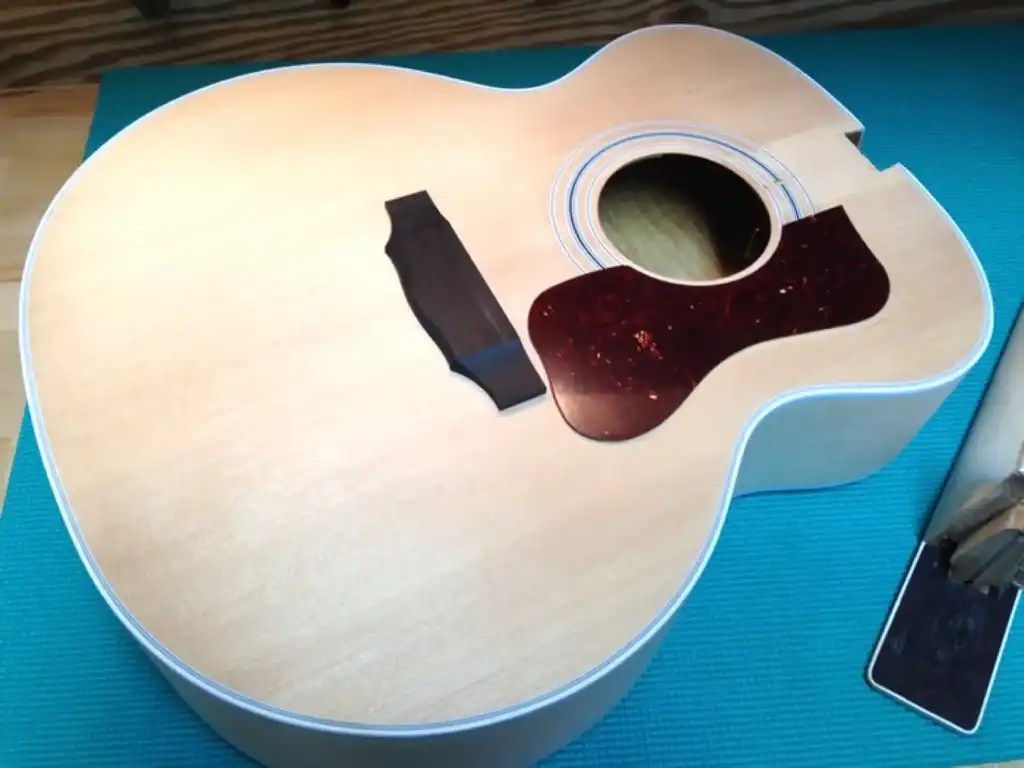
For a "true-to-the-period restoration", I would re-affix a celluloid pickguard using a solvent-based adhesive, fusing the pickguard back into the wood. But I have preferrable options: I can affix the old pickguard over the finish, but I can also simply make a new pickguard from a non-shrinking material. It can be black or even a faux tortoise-shell (see photo, below).
My 12-string originally came with an ebony bridge, where some F-412’s of that time shipped with rosewood bridges. I decided to stay with the original look, with the headplate, fingerboard and bridge all being of the same wood, so I hand-planed a piece of ebony square, thickness sanded it, traced the old bridge, cut it on the bandsaw, sanded to the traced lines and shaped the wings. I will wait to produce the saddle slot until after the new bridge is glued in place, as I wish to alter the compensation that had been established for the guitar, originally.
New Bridge and (optional) Pickguard